What is a pilonidal sinus?
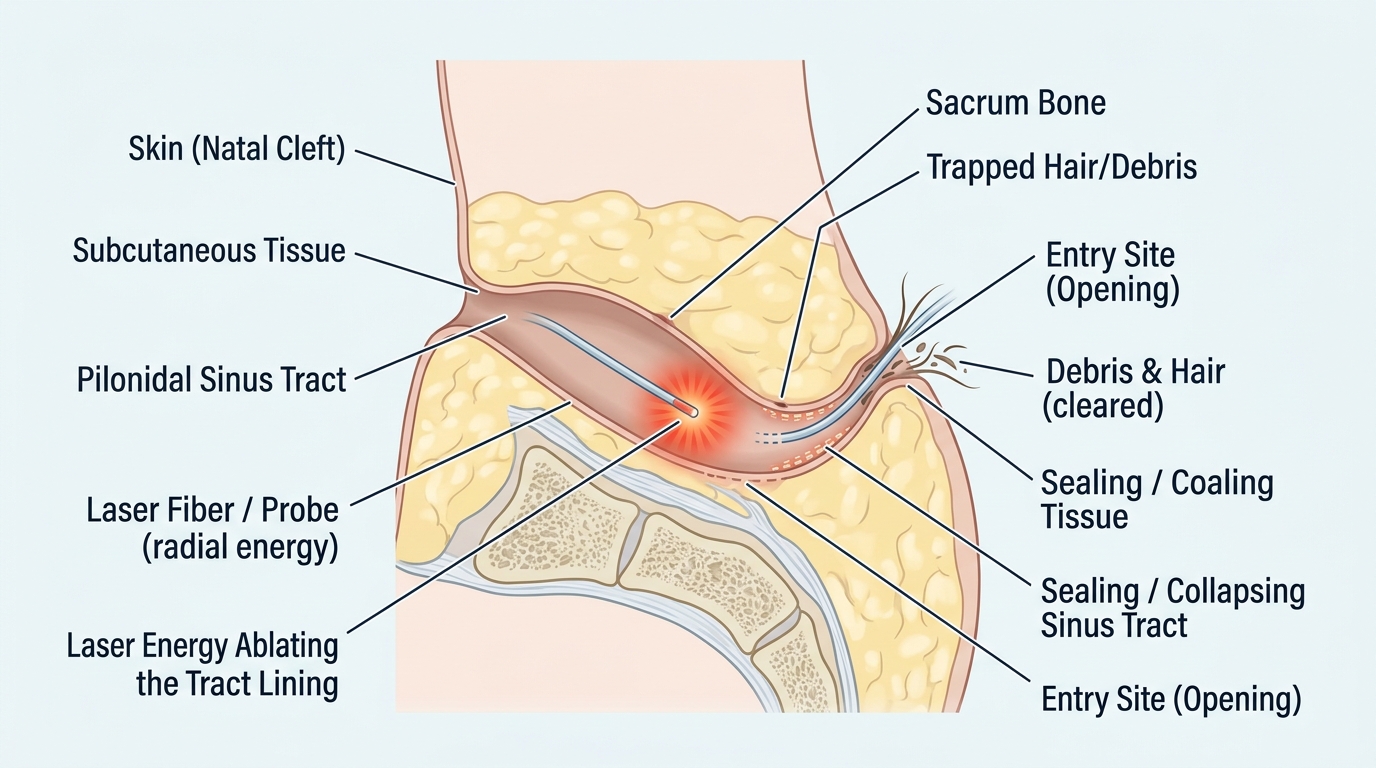
A pilonidal sinus is a small tunnel under the skin at the top of the buttock crease, just above the tailbone. It usually begins when loose hairs and skin debris are pressed into the skin of the crease, where they become trapped and set off a reaction. The body treats the trapped hair as a foreign body, and a narrow tract lined with inflamed tissue forms beneath the surface.
The condition is most common in younger adults and is seen more often in men, in people with thick or coarse body hair, and in those who spend long hours sitting.
What you may notice
- One or more small openings or pits in the crease above the tailbone
- Pain or tenderness when sitting or leaning back
- Swelling, redness and warmth over the area
- Discharge of fluid, pus or blood, sometimes with an unpleasant smell
- Visible hair emerging from an opening
If the tract becomes blocked and infected, an abscess can develop — a painful, tense swelling that often needs to be drained urgently. Many people first meet the condition this way and only later learn that a sinus tract has been left behind.
Why treatment is usually needed
A pilonidal sinus rarely settles for good on its own, because the tract and its lining remain in place after the acute infection has calmed down. Left untreated it tends to flare up repeatedly, and long-standing disease can leave a chronically discharging, uncomfortable area that interferes with sitting, driving, work and sport.
How laser ablation works
Laser ablation of a pilonidal sinus — often described in the surgical literature as sinus laser-assisted closure, or SiLaC — is a minimally invasive alternative to the traditional approach of cutting out a wide block of tissue and leaving an open wound to heal over weeks or months.
The principle is to destroy the lining of the tract rather than excise the surrounding skin and fat:
1. The openings are cleaned out and any trapped hair, debris and unhealthy tissue is removed from the tract. 2. A thin laser fibre is passed along the tract. 3. The fibre emits energy sideways, all around its tip, as it is slowly withdrawn. This ablates the lining and shrinks the tract so that its walls collapse and seal together.
Because almost nothing is removed, there is no large open wound. The skin openings are tiny and the natal cleft keeps its normal shape. The procedure is short — reported operating times average under twenty minutes — and in many series most cases are performed under local anaesthesia as a day case.
Recovery
Recovery after laser treatment is generally quicker and less painful than after wide excision surgery. Most people go home the same day, need only simple pain relief, and return to work and everyday activities within days rather than weeks. Healing of the treated tract itself continues underneath for several weeks; published series report an average total healing time of roughly four weeks.
Dressings, hygiene and hair-removal advice for the area are given individually, since keeping the crease clean and free of loose hair is an important part of a lasting result.
Results and the honest limits
Laser ablation has a good record in published studies, with reported cure rates around 85 percent and low complication rates. It has also been studied specifically in people whose pilonidal sinus has come back after previous surgery, where reviews of the available evidence report high healing rates with few complications — a group for whom repeat wide excision is particularly unwelcome.
It is important to be realistic about two points:
- Recurrence is possible. Around one in ten treated sinuses returns, and a small number of people need a second laser treatment or a different operation.
- Not every sinus is suitable. Very extensive, heavily branched or actively abscessed disease may need drainage first, or a different technique altogether.
Whether laser ablation is the right choice for you is decided in consultation, after the area has been examined and the extent of the tract assessed.
When to seek care promptly
Seek medical attention if the area becomes rapidly more painful, red and swollen, if you develop a fever, or if there is heavy bleeding or a large amount of foul-smelling discharge. These suggest an abscess or an active infection that should be treated without delay.
Pilonidal sinus consultations in Beirut, Lebanon
Dr. Samer Deeba is a colorectal surgeon based in Beirut, Lebanon, and Clinical Associate Professor of Surgery at the American University of Beirut. Laser ablation for pilonidal sinus disease is among the treatments he performs. If you have a painful or discharging area above the tailbone, or a pilonidal sinus that has returned after earlier surgery, you can request a consultation to have it examined and the options explained. Appointment requests are made through WhatsApp; please keep medical details for the consultation itself.
Sources
General information on this page draws on the peer-reviewed surgical literature on laser treatment of pilonidal sinus disease, including Efficacy and safety of laser ablation for recurrent pilonidal sinus: a systematic review and meta-analysis and a systematic review and meta-analysis of SiLaC versus EPSiT, written for this site. It is for education only and is not a substitute for a medical consultation.