
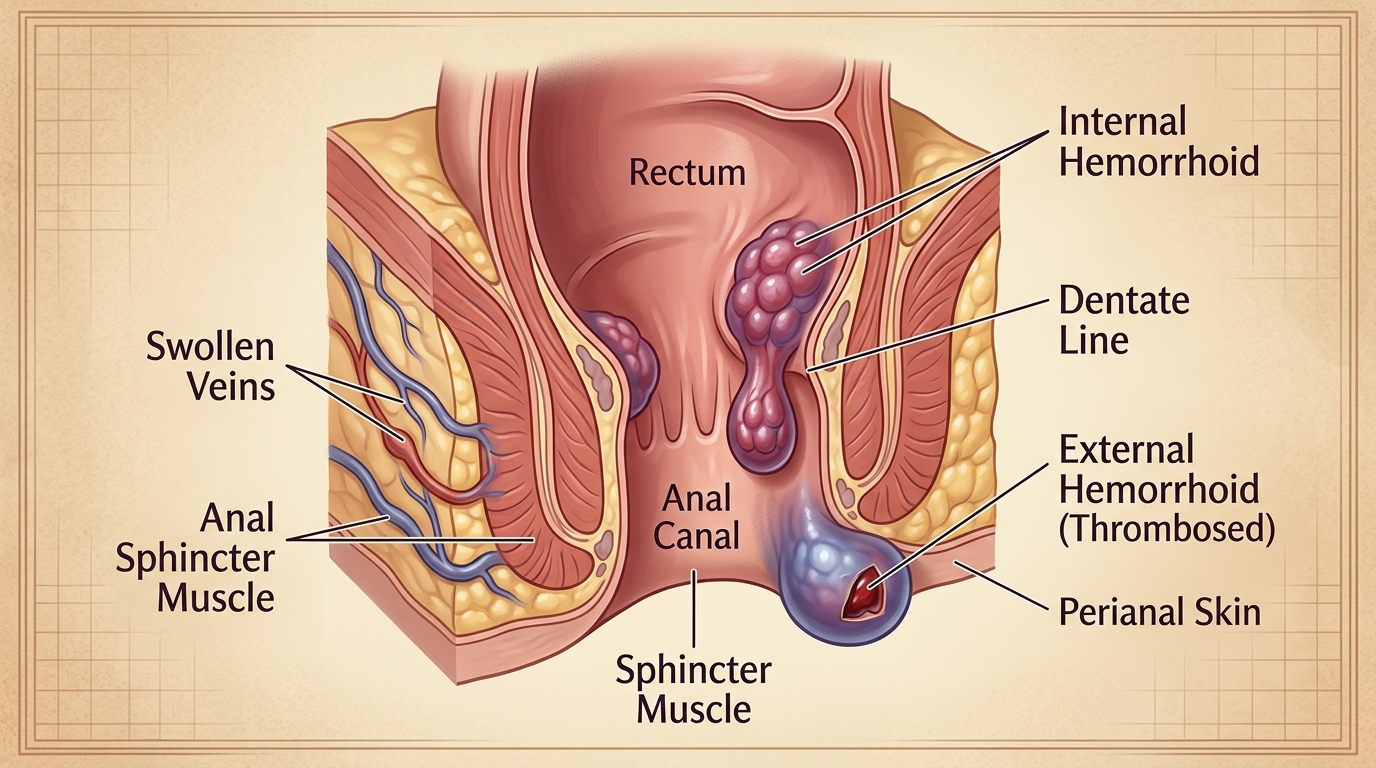
What are hemorrhoids?
Hemorrhoids, also called piles, are swollen and inflamed veins around the anus or in the lower part of the rectum. There are two types:
- External hemorrhoids, which form under the skin around the anus
- Internal hemorrhoids, which form in the lining of the anus and lower rectum
What causes hemorrhoids?
Hemorrhoids happen when there is too much pressure on the veins around the anus. This can be caused by:
- Straining during bowel movements
- Sitting on the toilet for long periods of time
- Chronic constipation or diarrhea
- A low-fibre diet
- Weakening of the supporting tissues in the anus and rectum, which can happen with ageing and pregnancy
- Frequently lifting heavy objects
Symptoms
The symptoms depend on which type you have.
With external hemorrhoids, you may have:
- Anal itching
- One or more hard, tender lumps near the anus
- Anal pain, especially when sitting
Too much straining, rubbing or cleaning around the anus may make symptoms worse. For many people, the symptoms of external hemorrhoids settle within a few days.
With internal hemorrhoids, you may have:
- Bleeding from the rectum — bright red blood in the stool, on toilet paper or in the toilet bowl after a bowel movement
- Prolapse, where a hemorrhoid falls through the anal opening
Internal hemorrhoids are usually not painful unless they prolapse. Prolapsed internal hemorrhoids may cause pain and discomfort.
Care at home
Most hemorrhoids can be managed at home by:
- Eating foods that are high in fibre
- Taking a stool softener or a fibre supplement
- Drinking enough fluids every day
- Not straining during bowel movements
- Not sitting on the toilet for long periods of time
- Taking over-the-counter pain relievers
- Taking warm baths, or a sitz bath, several times a day to relieve pain
- Using over-the-counter hemorrhoid creams, ointments or suppositories for mild pain, swelling and itching of external hemorrhoids
When to see a doctor
You should be seen if you:
- Still have symptoms after about a week of home care
- Have bleeding from the rectum. Hemorrhoids are a common cause of bleeding, but other conditions can also cause it — including Crohn's disease, ulcerative colitis, colorectal cancer and anal cancer. Bleeding should always be assessed so the cause can be identified.
Seek care promptly for heavy or repeated bleeding, feeling dizzy or faint, severe anal pain, or a persistent change in bowel habits.
How hemorrhoids are diagnosed
To find out whether you have hemorrhoids, a doctor:
- Asks about your medical history and bowel habits
- Performs a physical examination — external hemorrhoids can often be diagnosed by looking at the area around the anus
- Performs a digital rectal examination to check for internal hemorrhoids
- May perform a procedure such as anoscopy to look inside the anal canal, or a flexible sigmoidoscopy when other causes of bleeding need to be ruled out
Treatments
If home treatment does not help, a medical procedure may be needed. Several office-based procedures use different techniques to create scar tissue in the hemorrhoid, cutting off its blood supply so it shrinks. In severe cases, surgery may be required.
Which option is appropriate depends entirely on the individual case and is decided after an examination and discussion.
Can hemorrhoids be prevented?
You can help prevent hemorrhoids by:
- Eating foods that are high in fibre
- Taking a stool softener or a fibre supplement
- Drinking enough fluids every day
- Not straining during bowel movements
- Not sitting on the toilet for long periods of time
Hemorrhoid consultations in Beirut, Lebanon
Dr. Samer Deeba is a colorectal surgeon based in Beirut, Lebanon, and Clinical Associate Professor of Surgery at the American University of Beirut. If you have symptoms such as anal itching, discomfort or rectal bleeding, you can request a consultation to have them examined and discussed. Depending on the findings, the treatment options discussed may include office-based procedures and Laser Hemorrhoidoplasty (LHP). Appointment requests are made through WhatsApp; please keep medical details for the consultation itself.
Sources
This page summarises general patient information from MedlinePlus — Hemorrhoids (U.S. National Library of Medicine, with content from the National Institute of Diabetes and Digestive and Kidney Diseases). It is for education only and is not a substitute for a medical consultation.